
Blog
What Is the Ideal Indoor Humidity in Winter?

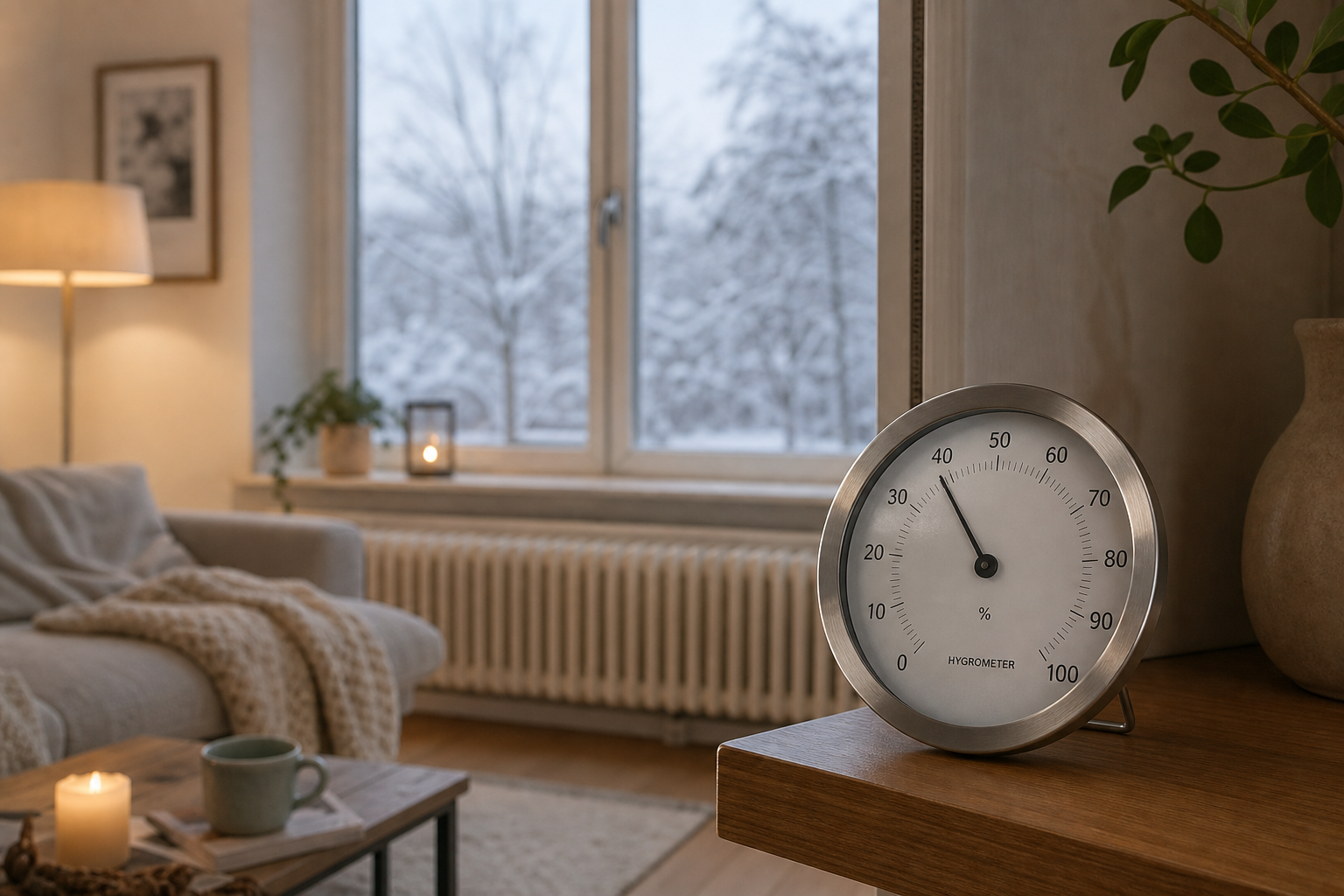
The ideal indoor humidity in winter for most heated European homes is usually around 40–50% relative humidity (RH), with 30–50% RH as a practical broader range. The right target depends on indoor temperature, condensation risk, insulation level, and whether anyone in the home is sensitive to dry air or mold.
If windows are already misting up or cold corners feel damp, aim lower rather than higher. If your home is genuinely too dry and a hygrometer confirms it, a humidifier can help — but only after you check ventilation and moisture sources first.
Quick answer
- Best practical winter target: about 40–50% RH
- Broad acceptable range: about 30–50% RH
- Avoid sustained high humidity: above about 60% RH raises condensation and mold risk
- Below about 30% RH: many people notice dry skin, irritated airways, or discomfort
- Use a hygrometer: do not guess based on feel alone
Table of contents
- Why indoor humidity matters in winter
- What happens when humidity is too low or too high
- What changes the ideal humidity level
- How to measure indoor humidity accurately
- How to raise or lower humidity in practice
- Common mistakes to avoid
- HavenPoint expert tip
- FAQ
- Conclusion and next step
Why indoor humidity matters in winter
Humidity affects comfort, health, condensation risk, and even how your heating feels. In winter, outdoor air is often cold and then dries further when it is heated indoors, so many homes end up with lower RH than occupants expect.
That is why dry indoor air in winter is common in heated homes. It can make skin, eyes, and airways feel dry, but too much moisture creates the opposite problem: condensation on cold surfaces, mold growth, and dust mite-friendly conditions.
What happens when humidity is too low or too high?
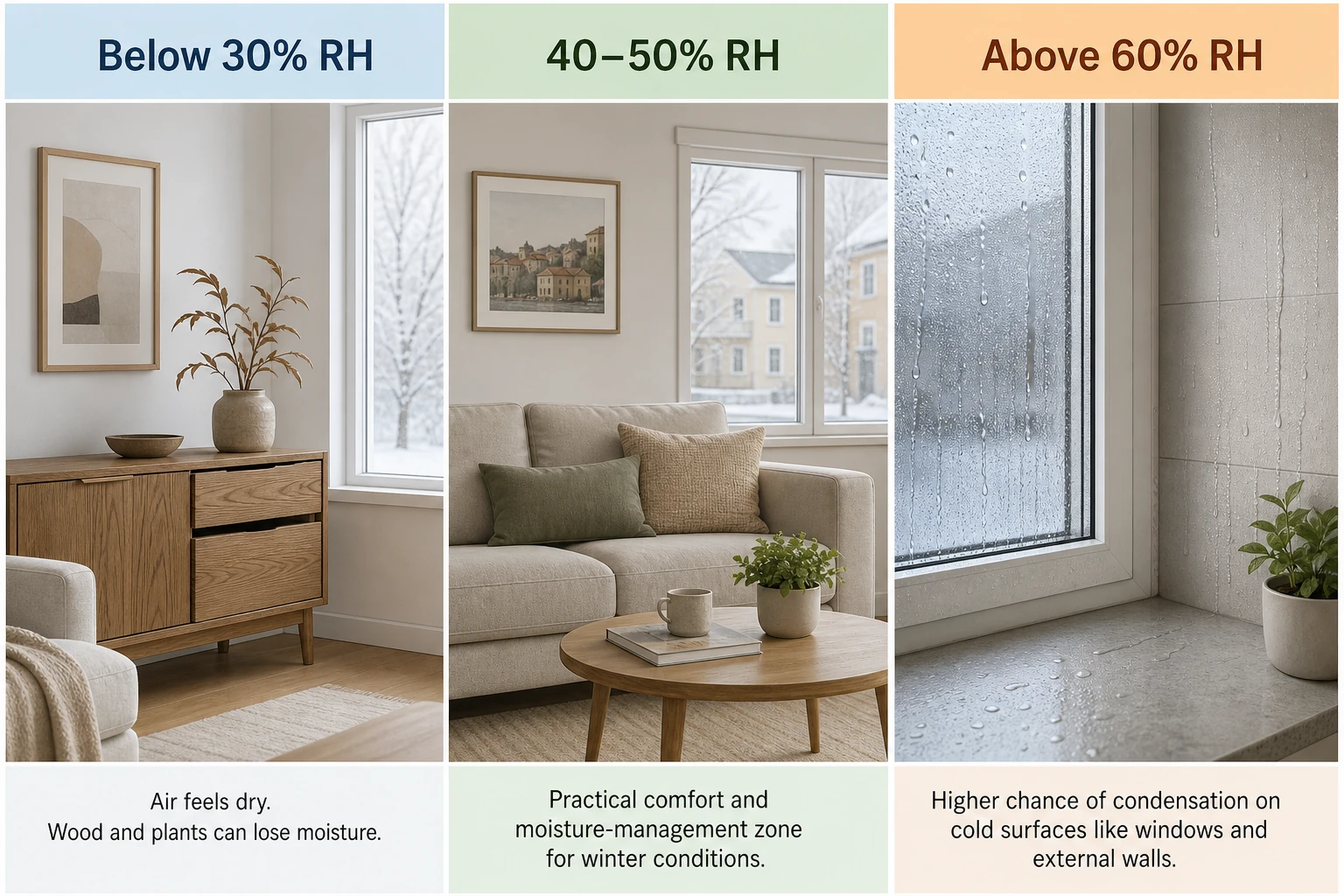
| Humidity level | Typical effect | What it usually means |
|---|---|---|
| Below ~30% RH | Dry skin, dry mucous membranes, discomfort | Air may be too dry for comfort in a heated home |
| 40–50% RH | Often a good winter balance | Comfortable for many homes if condensation is absent |
| Above ~60% RH | Higher condensation and mold risk | Usually too humid for winter indoor conditions |
Low humidity does not affect everyone equally, and temperature matters too. A room at 20°C and 45% RH can feel very different from a cooler room at the same RH.
High humidity is more dangerous when surfaces are cold. If a window, corner, or wall surface drops below the dew point, moisture condenses there first, which is why some homes cannot safely hold the same RH as newer, better insulated homes.
What changes the ideal humidity level?
Indoor temperature
Relative humidity is temperature-dependent. When you heat cold outdoor air, its RH falls, so the same moisture content can feel much drier indoors. That is one reason winter indoor humidity is often lower than people expect.
Condensation risk
If you see window condensation, damp corners, or mold growth, your safe upper limit is probably lower than the generic 40–50% target. In that case, moisture control matters more than chasing comfort at the highest end of the range.
Building type and airtightness
A well-insulated airtight home can often tolerate modestly higher winter RH than an older, colder building with weak windows or thermal bridges. In a colder building, higher RH can trigger condensation much sooner.
Health sensitivity
People with dry skin, irritated eyes, asthma, or allergy concerns may notice problems at the low end of the range. But if mold or condensation is already present, the safer response is usually to lower moisture and improve ventilation rather than humidify further.
How to measure indoor humidity accurately
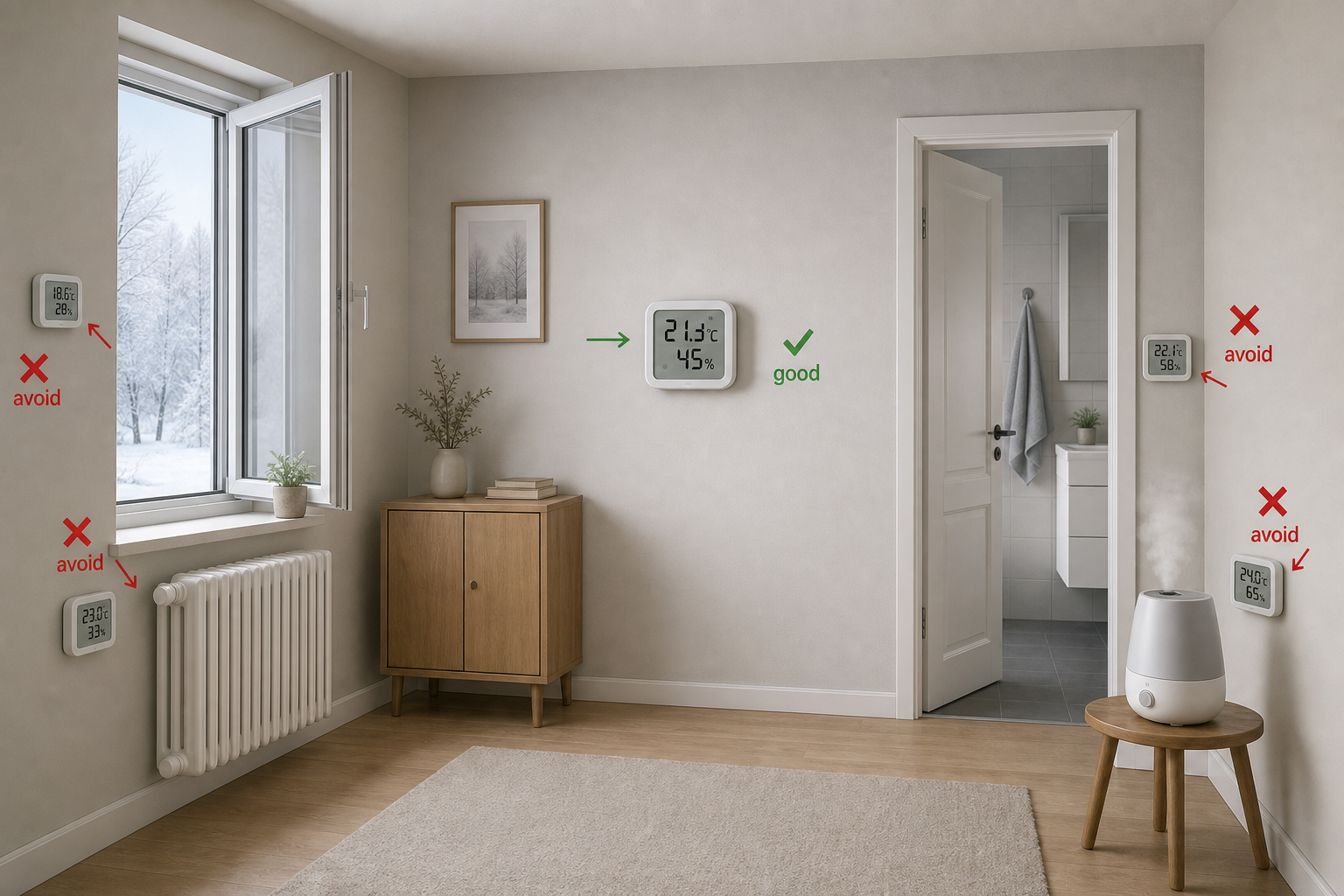
The easiest way to know your winter indoor humidity is to use a reliable hygrometer. Measure RH in the occupied room, not next to a radiator, humidifier, shower, open window, or cold window glass.
If possible, check more than one room. Bedrooms, living rooms, and bathrooms can behave very differently, especially in homes with uneven ventilation or local cold spots.
- Place the meter at roughly breathing height.
- Keep it away from direct heat sources.
- Allow time for the reading to stabilise.
- Compare readings in several rooms before changing anything.
- Treat a single cheap meter as a guide, not absolute truth.
A practical example: if a living room reads 20°C and 50% RH, the dew point is around 9.3°C. A cold window or poorly insulated surface below that temperature can attract condensation, even if the room itself feels comfortable.
How to raise or lower humidity in practice
How to reduce humidity
- Improve ventilation, especially in kitchens and bathrooms.
- Use balanced or heat recovery ventilation where appropriate.
- Reduce indoor moisture sources where possible.
- Use a dehumidifier if condensation or sustained high RH is present.
- Keep an eye on cold corners and windows after changes.
How to increase humidity
- First confirm that RH is really low with a hygrometer.
- Check whether the home is excessively ventilated or leaky.
- Use a humidifier only if low RH is the actual problem.
- Keep the target conservative, especially in older or colder homes.
- Clean and maintain the humidifier carefully to avoid hygiene risks.
For many homes, ventilation and moisture-source control should come before buying a humidifier for winter. If the building cannot safely hold more moisture, adding humidity can make the problem worse rather than better.
| Problem | More likely solution | Why |
|---|---|---|
| Dry air, no condensation | Measure first, then consider humidification | Confirms the problem is truly low RH |
| Window condensation | Reduce humidity and improve ventilation | Limits mold and surface moisture |
| Stuffiness plus dampness | Ventilation or dehumidification | Moisture removal is the priority |
| Uneven room humidity | Check airflow and room-by-room conditions | Local issues may be masking the real cause |
Common mistakes to avoid
- Setting a humidifier without measuring RH first.
- Aiming for 60% RH in winter because it feels more comfortable.
- Ignoring condensation on windows or cold corners.
- Using a cheap hygrometer in a bad location and trusting it blindly.
- Running a humidifier without regular cleaning.
- Assuming dryness always means a humidifier is the answer.
HavenPoint expert tip
Do not choose a humidity target before you know the coldest surfaces in the room. If the windows or corners are already close to the dew point, the “ideal” number is lower than generic advice suggests. In practice, the safest winter target is the highest RH your building can hold without visible condensation.
Practical real-world example
A dry, older apartment may sit at 28–32% RH in winter. The occupants notice dry throats and skin, so they buy a humidifier. But if the apartment also has weak ventilation and cold window frames, pushing humidity higher may create condensation, especially overnight.
In that case, the better sequence is: measure accurately, improve ventilation, check for cold surfaces, and only then decide whether modest humidification is still safe and useful.
FAQ
What is the best indoor humidity in winter?
For many heated homes, about 40–50% RH is a practical winter target. A broader acceptable range is usually about 30–50% RH, but the safe upper end depends on condensation risk.
Is 60% humidity too high indoors in winter?
Usually yes. Around 60% RH and above, condensation and mold risk rise, especially on cold surfaces or in less insulated homes.
Is 30% humidity too low?
It can be. Many people start to notice dryness, irritation, or discomfort below about 30% RH, although individual sensitivity varies.
Should I buy a humidifier for winter?
Only if you have measured low RH and ruled out ventilation or moisture-management issues. In a damp or condensation-prone home, a humidifier may make the problem worse.
How do temperature and condensation change the target?
The warmer the room air, the more moisture it can hold before RH rises. But if cold surfaces are present, a higher RH can still lead to condensation. That is why the safest target is often lower in older or colder buildings, even when comfort would allow more humidity.
How do I know if my hygrometer is reading correctly?
Check whether the reading is stable, place it correctly, and compare it with a second device if possible. The most important step is to avoid measuring beside heat sources, windows, or water sources.
Conclusion
The ideal indoor humidity in winter is usually around 40–50% RH, with 30–50% RH as a sensible working range for many European homes. The right answer is not just about comfort: it depends on condensation risk, building type, temperature, and how well the home is ventilated.
If your home is too dry, confirm it with a hygrometer before buying a humidifier. If it is already damp or shows condensation, the better fix is usually ventilation or moisture control, not adding more humidity.
Helpful next step: check your home’s current humidity with a reliable hygrometer and explore the most suitable moisture-control or ventilation solution for your space. See also HavenPoint’s ventilation guides, indoor air quality advice, heat recovery ventilation guidance, dehumidifier guidance, and humidifier guidance.