
Blog
How to Stop Bathroom Extractor Fan Backdraft

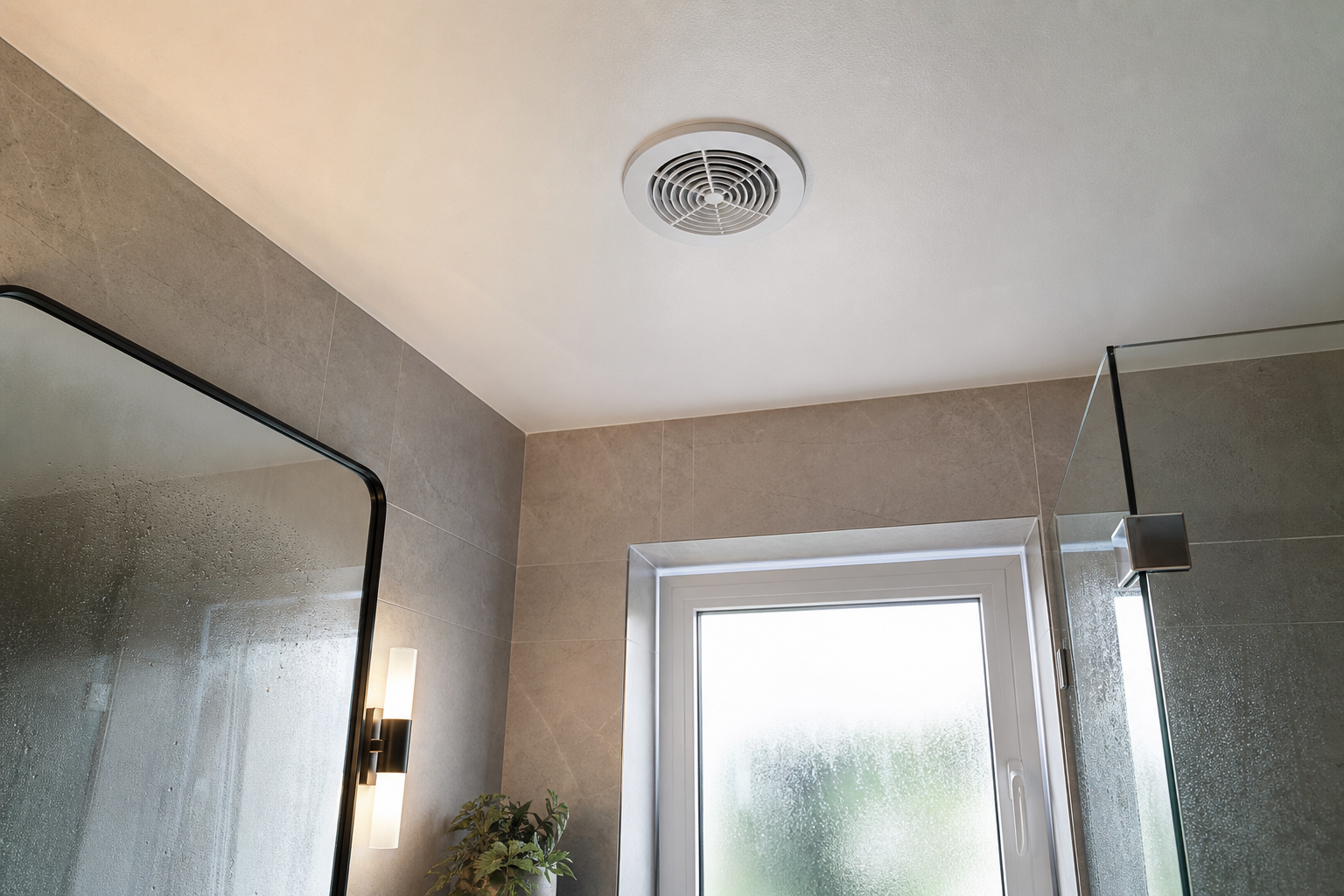
If you feel cold air, smells, or damp air coming back through a bathroom fan grille when the fan is off, that is usually a bathroom extractor fan backdraft. The most common causes are a missing or stuck non-return damper, leaky or poorly routed ducting, wind at the terminal, or pressure imbalance elsewhere in the home.
The safest first steps are simple checks: clean the grille, confirm the shutter moves freely, and look for obvious duct or terminal problems before replacing parts.
Quick Answer
Backdraft means air is moving the wrong way through the extractor path. If the fan is otherwise healthy, the usual fix is a correctly installed backdraught shutter or non-return damper. If the problem is caused by long duct runs, shared ducts, strong wind exposure, or depressurisation in the dwelling, a damper alone may help but not fully solve it.
Table of Contents
- What bathroom extractor fan backdraft is
- How to tell backdraft from underperformance
- Main causes of reverse airflow
- Practical fixes, from simple to more involved
- Cause, symptom and fix comparison table
- Common mistakes to avoid
- HavenPoint expert tip
- When to call a qualified HVAC professional
- FAQ
What bathroom extractor fan backdraft is
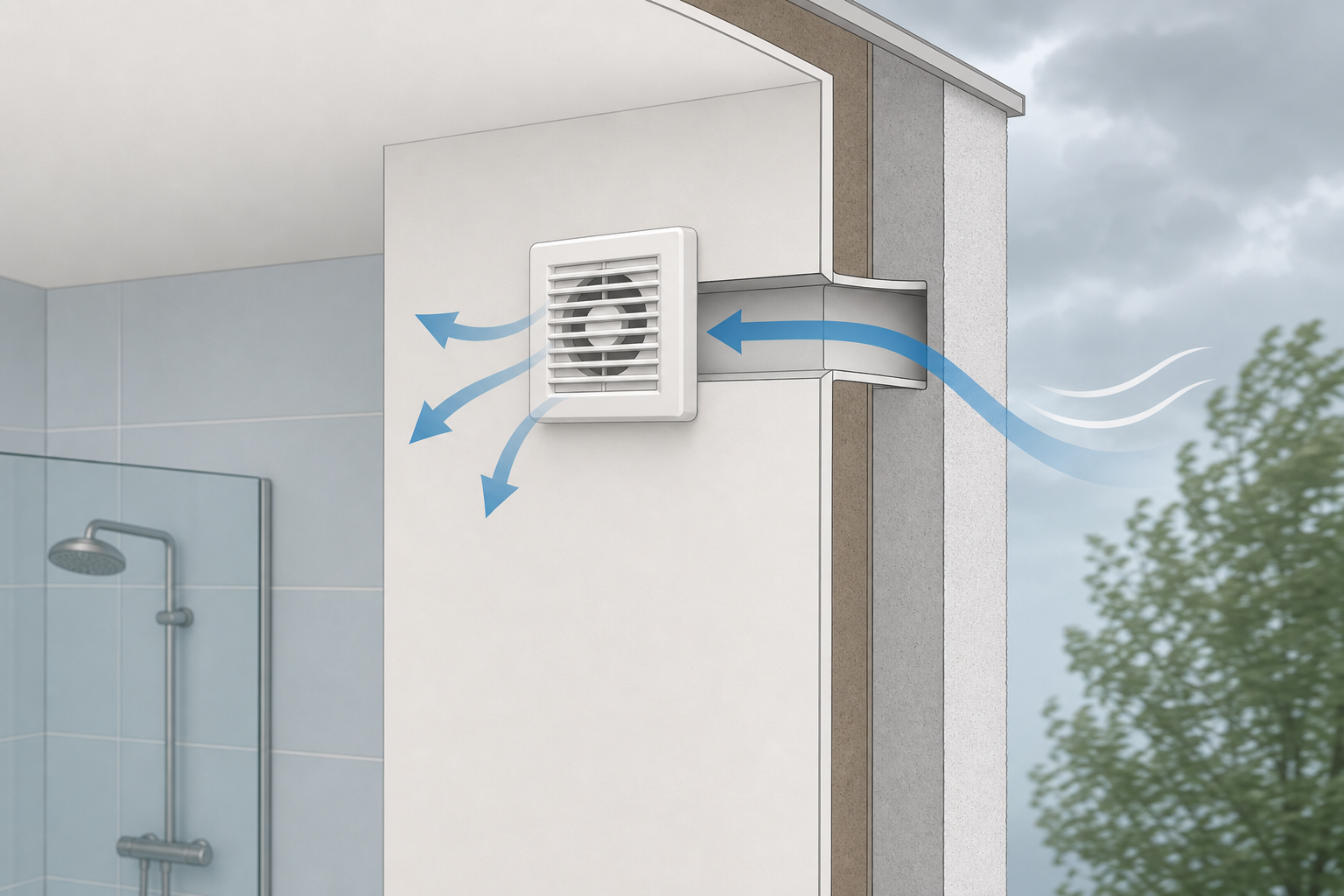
Bathroom extractor fan backdraft is reverse airflow through the fan or ductwork. Instead of air leaving the bathroom, outdoor air, cold draughts, or odors move back in through the same path when the fan is off, or when the system cannot overcome resistance or pressure conditions.
This is not always the same as poor extraction. A fan can seem weak because the duct is restrictive, the shutter is stuck, the grille is dirty, or the fan is under pressure from other exhaust appliances. The diagnosis matters because the fix depends on the cause.
How to tell backdraft from underperformance
Backdraft has a different feel from simple low airflow. The most useful clue is direction: if air is coming in through the grille when the fan is off, that is reverse flow. If the fan runs but humidity clears slowly, the issue may be underperformance rather than true backdraft.
| Observation | Likely diagnosis | Typical next check |
|---|---|---|
| Cold air or smells come in when the fan is off | Backdraft or leaking shutter | Check damper operation and terminal sealing |
| Fan runs but mirror still steams up | Underperformance or high duct resistance | Inspect grille, duct length, bends and outlet |
| Problem is worse on windy days | Wind-driven reverse airflow | Check the wall or roof terminal and damper location |
| Problem worsens when kitchen hood or dryer runs | Whole-home depressurisation | Look for pressure imbalance across the dwelling |
A cautious smoke or tissue test at the grille can help, but only as a rough check. If you see movement toward the room with the fan off, treat it as a real airflow problem and continue diagnosing the duct path.
Main causes of reverse airflow in extractor fans
1. Missing, stuck, or poorly fitted non-return damper
A non-return damper or backdraught shutter is the main device used to stop reverse airflow. If it is missing, installed backwards, dirty, or jammed open, the bathroom can feel draughty even when the fan is off.
2. Ducting with too much resistance
Long duct runs, multiple bends, undersized ducting, and poor termination all increase resistance. That does two things: it weakens normal extraction and makes it easier for air to move the wrong way when the fan is off or underpowered.
3. Wind pressure at the terminal
If the external wall cap or roof terminal is exposed, wind can push air back through a weak exhaust path. This is a common reason homeowners notice the problem on cold or windy days.
4. Pressure imbalance in the home
Other exhaust appliances, tight building envelopes, or shared duct systems can create negative pressure. In that case, the bathroom fan path may become part of a wider pressure problem, and a damper alone may only reduce symptoms.
5. Condensation, dirt, or cold-space issues
If the duct passes through a cold space, moisture can collect and make shutters stick. Dirt build-up can do the same. In these cases the fan may not be failing electrically; the airflow path is simply not operating as intended.
Practical fixes, from simple checks to more involved solutions
Start with reversible checks first. They are cheaper, safer, and often enough to identify whether the issue is the fan itself, the damper, or the duct system.
- Clean the grille and visible fan parts. Dust and residue can restrict movement or reduce airflow.
- Check for a built-in damper. Some fans already have one, so adding another may create unnecessary resistance.
- Confirm the shutter opens and closes freely. A stuck flap can mimic a weak fan or cause backdraft.
- Inspect the terminal outside. Look for obvious obstruction, damage, or poor weather sealing.
- Shorten or straighten the duct route if possible. Fewer bends and less length usually help performance.
- Improve duct insulation in cold zones. This can reduce condensation that causes sticking or dripping.
- Check for pressure imbalance. Large extract appliances elsewhere may be overwhelming the bathroom fan path.
If the fan has no effective backdraught shutter, adding one at the correct point is often the first hardware fix. But it should match the fan pressure capability and the installation orientation. A stiff shutter can reduce reverse flow and still make forward airflow worse if the system is already marginal.
For shared ducts, the solution may need to be system-level rather than local. One bathroom damper cannot reliably solve cross-flow if the common duct or branch arrangement is the real issue.
| Likely cause | Typical symptom | Typical fix |
|---|---|---|
| Missing or stuck damper | Cold draught or odor return when fan is off | Repair, replace, or correctly install a non-return damper |
| Long or bent duct run | Weak extraction and occasional reverse flow | Reduce resistance, improve routing, or reassess fan suitability |
| Wind exposure at terminal | Backdraft worse on windy days | Improve terminal design and sealing |
| Pressure imbalance in dwelling | Problem worsens when other extract appliances run | Assess whole-house air balance |
| Condensation or dirt in duct | Shutter sticks or airflow varies with weather | Clean, insulate, and correct moisture issues |
| Shared exhaust duct | Cross-flow or odors from another branch | Use an approved shared-duct design with proper dampers |
When a non-return damper helps, and when it does not
A non-return damper is appropriate when the main problem is reverse flow through an otherwise reasonable fan and duct arrangement. It is less effective when the home is strongly depressurised, the duct is badly designed, or the outlet arrangement is poor.
That is why “fit a damper” is not always a complete answer. It can be the right first hardware fix, but only if the surrounding installation supports it.
Practical real-world example
A homeowner notices a bathroom fan grille feels cold on windy evenings, and a faint smell returns after showering. The fan still runs, so it is easy to assume the motor is weak. But inspection shows the duct is long, the terminal is exposed, and the shutter is sticky. In that case, the real issue is not one fault but a combination of backdraft risk and poor airflow path.
The sensible sequence is: clean and test the shutter, check the terminal, then decide whether the duct route or fan selection also needs attention. If the same house has a strong kitchen hood, pressure imbalance may be part of the problem too.
Common mistakes to avoid
- Assuming every cold draught means the fan is broken.
- Adding a damper without checking whether one already exists.
- Choosing a stronger fan without checking duct resistance first.
- Ignoring shared ducts and cross-flow between branches.
- Changing duct routes in fire-separated areas without verifying local approval.
HavenPoint expert tip
Think of backdraft as a system symptom, not just a fan fault. If the shutter is fine but the problem returns when the kitchen hood or dryer runs, look at the whole dwelling’s pressure balance before buying a replacement fan.
Related guide: choosing the right backdraft shutter
If you have confirmed reverse airflow at the grille or terminal, the next practical step is often to understand how backdraught shutters work and where they should be fitted. Read Extractor Fan Backdraft Shutter: Why You Need One for a focused guide on the hardware side of the fix.
When to call a qualified HVAC professional
Call a qualified installer if the issue may involve shared ducting, a fire-separated shaft, a roof terminal, or a pressure problem you cannot isolate. Professional help is also sensible if the fan still backdrafts after cleaning and shutter checks, or if you are unsure whether the installation already contains a damper.
Country rules can vary across the EU, especially for fire safety, shaft penetrations, and what components are permitted in a given installation type. If you are changing duct routes or replacing terminals, verify the local requirements for your dwelling.
FAQ
Why does my bathroom fan blow air back into the room?
Usually because the shutter is missing, stuck, leaking, or overwhelmed by wind or pressure differences in the duct system. Start by checking whether the grille feels draughty only when the fan is off, because that points more strongly to backdraft than to weak extraction alone. If it happens mainly on windy days, the outside terminal or its sealing is often part of the problem.
Will a non-return damper always fix extractor fan backdraft?
No. It helps when reverse airflow is the main problem, but it will not fully solve bad duct design or whole-house depressurisation. If the duct run is long, badly bent, or shared with other branches, you may need both a damper and a broader installation correction. In some homes, the real fix is improving the whole exhaust path rather than only the bathroom fan.
How can I tell if the fan already has a damper?
Check the fan housing, spigot, wall cap, or roof terminal. Some systems use an integral shutter, while others place the damper elsewhere in the duct. If you cannot see it easily, do not assume it is missing; some dampers sit inside the housing or at the terminal. A qualified installer can confirm whether it is present and whether it moves freely.
Can a dirty fan cause backdraft?
A dirty grille or stuck shutter can contribute to the problem. Dirt usually does not create backdraft by itself, but it can worsen airflow and stop the damper moving properly. Clean the accessible parts first, then retest the airflow before assuming the motor has failed. If the fan is still weak after cleaning, the duct path may be the real restriction.
Is backdraft more likely in winter?
It can be. Cold weather, wind exposure, and condensation inside cold ducts can all make reverse airflow or sticking shutters more noticeable. A bathroom that feels fine in mild weather may reveal its weakness in winter because the pressure difference and temperature contrast are higher. That does not mean the fan is only a winter problem; it usually means the installation margin is too small.
Do EU rules mean every bathroom fan needs the same type of damper?
No. EU product rules and installation requirements vary by device type and by country. The safe choice depends on the exact fan, duct route, and local code context. In practice, that means the damper must fit the installation, not just the fan diameter.
Conclusion
If you have a bathroom extractor fan backdraft, start by proving whether the air is truly reversing or whether the fan is simply struggling against resistance. Clean the fan, check the shutter, inspect the terminal, and look for pressure imbalance before replacing parts.
If the problem points to duct design, shared ducts, wind exposure, or a fire-separated installation, get a qualified HVAC professional involved. That is the best way to stop the draught safely and avoid creating a new airflow or compliance problem.
If you want the next step after diagnosing reverse airflow, read the guide on backdraft shutters and how they reduce bathroom fan draughts. Extractor Fan Backdraft Shutter Guide
References
- Broan-NuTone Support — Why does my damper stay open on my unit?
- Vent-Axia — Eclipse 100XT Timer Fan with Backdraught Shutter
- Pacific Northwest National Laboratory / Building America Solution Center — Depressurization Analysis
- Pacific Northwest National Laboratory / Building America Solution Center — Back-Draft Dampers at Shared Common Exhaust Duct
- EUR-Lex / European Union — EUR-Lex – 02014R1253-20170109 – EN
- BathExhaust — Bathroom Extract Fan Ducting: Size, Routing & Termination
- Panasonic — How to prevent dripping vent fans in cold weather